What to Look for in Event Live Streaming Services Before You Sign a Contract

Signing a contract for event live streaming services is one of the easier decisions to make in event planning and one of the more expensive ones to get wrong. When a remote audience hits buffering, loses audio, or watches a feed cut out mid-keynote, they do not blame the platform. They blame the event. That impression travels with your brand well after the stream ends. So what separates a production partner worth hiring from one that just has a reasonable price? Knowing what to look for before you sign.
At GlobeStream Media, we have delivered event live streaming services for organizations ranging from GoPro's ongoing internal communications events to the Audi e-tron launch at the Los Angeles Auto Show. Across that range, one thing has held true: the quality of a stream is determined well before show day. It lives in the planning process, the infrastructure built in advance, and the people running it in real time. Knowing what those things look like from the outside is how planners find partners who will follow through.
What Distinguishes Professional Event Live Streaming Services from a Basic Setup
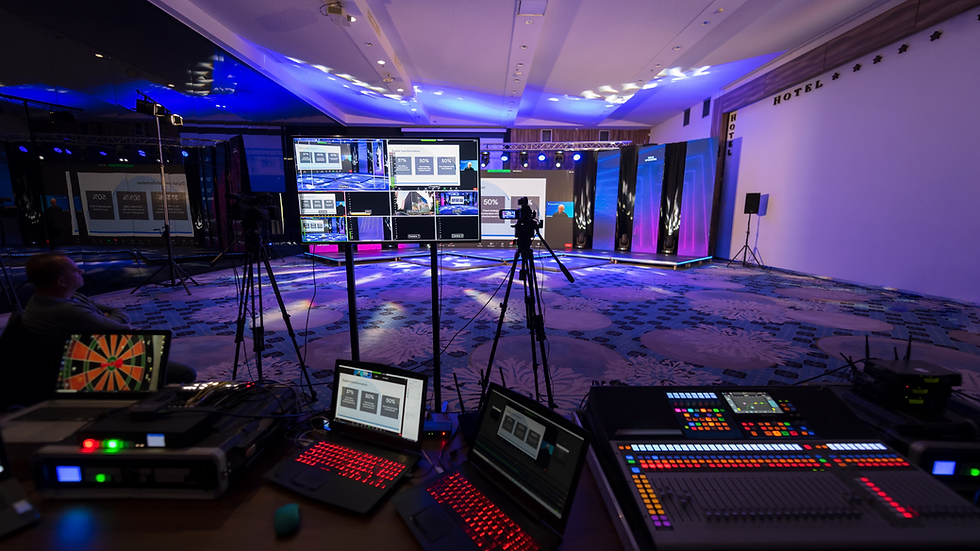
Not all event live streaming services are the same - and the gap between a basic setup and a professional one is not always obvious from a proposal. A basic setup delivers a camera feed to a platform and hopes the connection holds. A professional production engineers the entire signal chain - from the cameras capturing the presenter, through the encoding system, across the delivery network, to the screen your remote audience is watching - with redundancy at every point that matters.
The global live-streaming market is projected to reach $247 billion by 2027, growing at over 20 percent annually. That growth has also raised what audiences expect. Remote attendees hold live streams to broadcast standards now. They notice when the production falls short - and they leave.
Brett Casadonte, CEO of GlobeStream Media, puts it directly: "You really need to start with the message and start with your brand because whenever you create a live experience, it needs to be, first and foremost, an authentic representation of your brand." A live stream is not a signal moving from a camera to a platform. It is what your remote audience experiences of your event - and every decision that shapes it should start with them.
What to Look for in Event Live Streaming Services Before You Sign
These are the questions that separate a well-chosen partner from a regrettable one.
Does the partner start with your audience? The most telling question in any evaluation has nothing to do with technology. A streaming partner who leads with encoder specs and platform features before asking about your audience, your brand, or what the event is trying to accomplish is telling you something about how they work. As Casadonte notes: "The scope of productions can vary so dramatically and impact the cost of a production." A scope that fits starts with who you are designing the experience for.
What does their encoding and redundancy setup look like? Encoding converts your live video signal into a format that can be delivered over the internet. The quality of that process - and what happens when something in it fails - determines whether your audience sees broadcast-quality content or watches a frozen screen. Ask specifically about redundant encoding pipelines: backup systems that take over automatically if the primary fails. A partner who cannot clearly explain their failover plan has not fully thought through what happens when things go wrong.
How is the stream delivered to remote audiences? Professional event live streaming services use content delivery networks to distribute the stream across multiple servers globally, reducing latency and ensuring a stable signal whether a viewer is in Dallas or Singapore. Ask where their CDN partnerships are and what delivery regions they cover.
What is the crew structure on show day? Streaming an event is not a one-person side task. A professional production includes a dedicated streaming operator focused entirely on the virtual audience - separate from whoever is managing the in-room show. That dedicated presence is what catches a signal drop before viewers see it, handles a platform issue before it becomes a disruption, and keeps a steady eye on the remote experience from open to close. Ask who specifically owns the stream on show day and what they are empowered to do when something needs to change fast.
What does the pre-event process look like? Ask specifically about presenter pre-checks, technical rehearsals, and contingency planning. The decisions that protect your audience happen before the event, not during it.
What is their experience at your scale? A team that has streamed a 50-person webinar and a team that has managed a global multi-session conference with simultaneous language streams are not equivalent, even if their proposals look similar. Ask for specific examples at your scale, and listen for how they describe problems they solved - not just highlights.
Why the Production Partner Matters More Than the Platform
The platform matters - it needs the right capabilities for your audience - but it is not what determines the quality of your remote attendees' experience. That comes down to the production team working inside it. GlobeStream Media has delivered event live streaming services on platforms including Socio, Brella, and Zoom Events. A skilled production team delivers a strong experience across a range of platforms. A team without that depth will struggle on the best platform available.
Working with an independent production partner rather than defaulting to in-house venue AV also changes what your remote audience gets. Independent partners are on average around 40 percent more cost effective than venue AV providers - and they come with dedicated streaming expertise rather than a mindset that treats the virtual audience as an add-on to the real show.
What Your Remote Audience Actually Needs
Your remote audience has set aside time to attend your event from somewhere else. A home office. A hotel room. A conference room in another city. They made that choice because the event matters to them. What they need in return is an experience built around them - clear audio, stable video, a platform that does not fight them, and content that lands with the same weight it would in the room.
When you evaluate event live streaming services through that lens, the right questions come naturally. The partner who leads by asking who your audience is and what they need to walk away with is almost always a better bet than the one who opens with a list of encoders and platform integrations.
Choosing an Event Live Streaming Partner That Delivers
Event live streaming services are not a commodity. The contract you sign is not just a technology agreement - it is a commitment to your remote audience that someone has thought through their experience and will be there on show day to protect it.
At GlobeStream Media, event live streaming is a discipline we have built across years of experience with corporate clients, event planners, and creative agencies at a wide range of scales. If you are evaluating live streaming partners for your next event, reach out to GlobeStream Media to talk through what your audience needs and what a production designed around them looks like.
Frequently Asked Questions
What is the difference between event live streaming services and a basic live stream?
A basic live stream gets a video signal from a camera to a platform. Event live streaming services engineer the entire experience - multi-camera capture, broadcast-quality encoding, redundant infrastructure, dedicated streaming operators, platform configuration, pre-event rehearsals, and real-time monitoring. The difference shows up most clearly when something goes wrong: a professionally managed stream has contingency systems that activate before the audience notices a problem. A basic setup often has no fallback at all.
How do I know if a live streaming partner is right for my event?
Start by asking how they approach the audience experience, not just the technical setup. A partner who begins by understanding who your remote attendees are and what they need tends to make better production decisions across the board. Beyond that, ask for specific examples at your event scale and format, ask about their redundancy and failover plans, and ask who on their team will be dedicated to the stream on show day. Those answers tell you more than any equipment list.
Should the virtual experience be designed separately from the in-room event?
Yes - and this is one of the clearest markers of a sophisticated streaming partner. The in-room audience and the remote audience have fundamentally different needs, sight lines, and relationships to the content. A professional event live streaming service designs the virtual experience as its own production - not an afterthought bolted onto the in-room show. Remote attendees who are treated as a first-class audience consistently engage more, stay longer, and leave with a stronger impression of the brand behind the event.
Summary
Evaluating event live streaming services before signing a contract comes down to one foundational question: does this partner start with the audience? The technical elements - encoding infrastructure, redundancy planning, CDN delivery, crew structure, rehearsal process - all matter enormously, but they are best understood as the means by which a production partner serves the people watching remotely. A team that begins every conversation by asking who the audience is and what they need tends to make better decisions across every one of those technical dimensions. The contract you sign is ultimately a commitment to your remote attendees that their experience has been designed for them.


Comments