Sustainable Event Production: What It Means and Where to Start

Sustainable event production is one of those phrases that gets used a lot and defined precisely almost never. Is it LED lighting? Carbon offsets? A paperless registration process? The short answer is yes to all of those - but none of them is the whole picture. Sustainable event production is a planning philosophy before it is a checklist of eco-friendly swaps. And for corporate planners who want to take it seriously, that distinction is exactly where to start.
At GlobeStream Media, we approach sustainable production the same way we approach every event: by starting with what the audience needs and working outward from there. You cannot make smart decisions about resources, waste, or efficiency until you know what the event is actually trying to accomplish. Sustainability is about alignment - using what the moment calls for, in service of the people you are trying to reach, without excess. That is a production philosophy, not a product category.
What Sustainable Event Production Actually Means
The most useful working definition is this: planning, organizing, and executing events in a way that reduces negative environmental impact while still delivering the experience your audience needs. It is not about doing less. It is about doing things with more care.
The Events Industry Council estimates that implementing sustainable practices can result in a 20 to 30 percent reduction in event costs and a 60 to 80 percent reduction in waste. Those numbers reflect a shift that goes beyond bringing in reusable water bottles. Sustainable production touches energy use, equipment selection, vendor relationships, digital versus print decisions, and the overall production footprint - meaning how much gear, crew, and infrastructure an event actually requires to serve its audience well.
The global events industry generates approximately 1.5 billion tons of CO2 annually. According to a 2024 report by the Events Industry Council, more than 70 percent of attendees say environmental practices influence whether they attend an event. Sustainability in event production has moved well past a nice-to-have - it is now something audiences factor into the decision of whether to show up at all.
Why Sustainable Event Production Starts with the Audience
The most impactful sustainability decisions happen before any equipment is loaded onto a truck - in the planning process, when the scope of the event is still being defined around what the audience actually needs.
Brett Casadonte, CEO of GlobeStream Media, speaks to this directly: "You really need to start with the message and start with your brand because whenever you create a live experience, it needs to be, first and foremost, an authentic representation of your brand." Starting with the audience - what they need to feel, understand, and take away - is the same principle that keeps productions from becoming wasteful. When you know who you are designing for and what they need, you stop making decisions based on assumptions and start making them based on purpose.
When the audience and the message drive the planning process, resource decisions get calibrated to the actual need. Over-production - bringing in more gear than the room requires, printing more materials than attendees will use - is one of the most common and least discussed sources of event waste. It almost always traces back to planning that started with what looked impressive rather than what served the people in the room.
As Casadonte puts it: "The scope of productions can vary so dramatically and impact the cost of a production." That same logic applies directly to environmental impact. A production right-sized to its audience and goals consumes less energy, generates less waste, and places less strain on the venue - without taking anything away from the people it is designed for.
Where Corporate Planners Can Start with Sustainable Event Production
The most impactful starting points do not require overhauling everything at once. These are the areas that tend to move the needle most.
Right-size the production scope around your audience. The single most effective sustainability decision is building a production footprint that matches what your audience actually needs to have the experience you intend. A thoughtfully scaled production uses less energy, generates less waste, and is often easier to execute well. Start with a clear brief - what does the audience need to feel, learn, or do? - and let that determine the scope rather than defaulting to what you did last time.
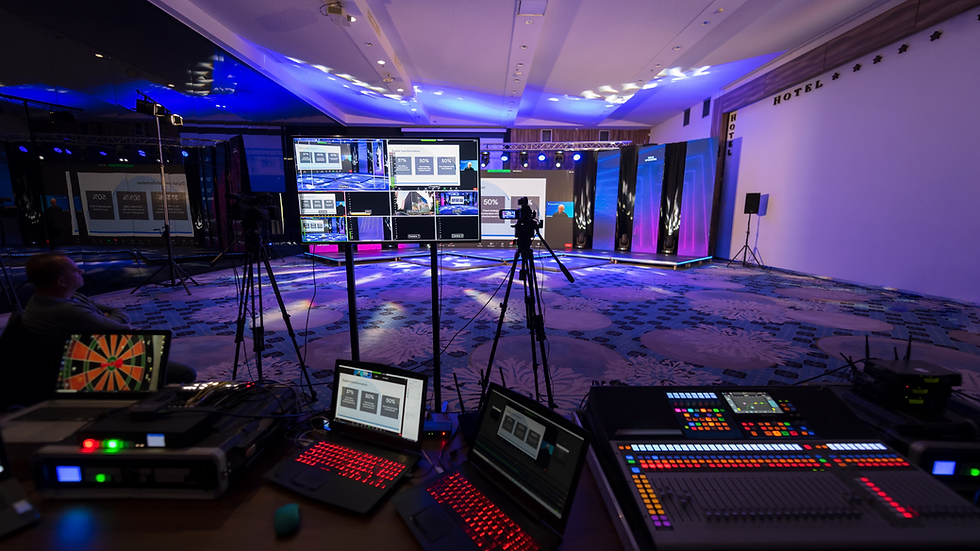
Lean into AV technology that supports efficiency. LED lighting can reduce overall energy usage by up to 75 percent compared to traditional fixtures - and it runs cooler, which reduces the venue's climate control demands. LED walls deliver a strong in-room experience for your audience and stream cleanly to remote viewers, reducing the need for parallel production infrastructure. PTZ cameras, also called robos or robotic cameras, are another efficient choice - a single operator can manage multiple units, reducing crew requirements while giving your virtual audience dynamic, broadcast-quality coverage.
Reduce print and physical materials. Digital signage, event apps, and electronic ticketing can reduce the need for printed materials by up to 80 percent. For corporate events with large attendee counts, that reduction adds up quickly. Planners who build digital-first communication workflows from the start eliminate a significant source of event waste without any compromise to what the attendee experiences.
Consider the hybrid option as an audience reach and sustainability strategy. Extending a corporate event to a remote audience is not just a reach decision - it is also a sustainability one. Every remote attendee who participates via a well-produced stream rather than traveling eliminates the carbon footprint associated with that travel. A hybrid format designed with the remote audience in mind from the start - not as a camera feed bolted onto the in-room event - serves both groups well while meaningfully reducing the event's overall environmental footprint.
Engage your production partner early. The earlier a production partner is in the room with you, the more room there is to design for your audience efficiently. A partner brought in late adapts to a plan already built on assumptions; one engaged early helps shape a plan around goals. That difference shows up in cost, in quality, and in how much the production consumes to deliver its intended experience.
What Your Audience Expects from Sustainable Events
Sustainability is no longer purely an internal operations conversation. Research from M&IW's 2024-2025 survey of event programs found that sustainability practices are now a core decision criterion alongside cost, risk, and attendee experience. Sponsors and investors track sustainability metrics. Attendees - particularly younger professionals - are increasingly direct about expecting events that reflect their values.
An event built with genuine intention - one where the production scope serves the audience rather than outpacing it - communicates something about the organization running it. That kind of care is something audiences feel, even when they cannot name the specific decisions behind it.
Building Sustainable Event Production into Your Process
Sustainable event production is not a single upgrade or a single decision. It is a planning orientation - one that starts with who you are designing the experience for, makes every resource and technology decision in service of that audience, and treats environmental responsibility as compatible with delivering something exceptional rather than in tension with it.
At GlobeStream Media, we work with corporate clients, event planners, and creative agencies to build productions that are right-sized, intentional, and built around what the audience needs. If sustainable event production is a priority for your next corporate event, reach out to GlobeStream Media to talk through what that looks like in practice.
Frequently Asked Questions
What is the difference between a sustainable event and a standard corporate event production?
A sustainable event applies the same standards for quality and audience experience but adds intentional resource management at every stage - from how the production scope is set to the equipment choices, vendor relationships, and waste reduction strategies. The core difference is that sustainability is built into the planning process from the start, shaped by what the audience needs, not layered on as an afterthought.
Does sustainable event production cost more?
Not necessarily - and in some cases it costs less. Research from the Events Industry Council indicates that sustainable practices can reduce event costs by 20 to 30 percent. Right-sizing the production scope around your audience, choosing energy-efficient equipment, and reducing print and physical materials can all lower costs while reducing environmental impact. The key is making those decisions early, when they can be built into the plan rather than retrofitted onto it.
How does hybrid event production fit into a sustainability strategy?
Hybrid production is one of the most practical sustainability tools available to corporate planners. Every remote attendee who participates via a well-produced stream rather than traveling eliminates travel-related emissions. A hybrid format that treats the virtual audience as a distinct experience - not a side stream of the in-room event - extends the event's reach while meaningfully reducing its overall footprint.
Summary
Sustainable event production starts with intention in the planning process - specifically, with a clear picture of what the audience needs and what the event is trying to accomplish. The most impactful decisions - right-sizing the production scope, choosing energy-efficient AV technology, reducing physical materials, treating the hybrid audience as a first-class design consideration, and engaging a production partner early - all flow from that starting point. When sustainability is treated as a planning discipline rooted in audience-first thinking rather than a checklist of eco-friendly add-ons, it tends to produce better events, lower costs, and a smaller environmental footprint at the same time.


Comments